🎈Kid-Friendly Parties That Adults Actually Enjoy (Yes, it’s possible—pinkie promise.)


If you’ve ever attended a kids’ birthday party, you know the drill: the little ones are in a cupcake-fueled blur of excitement, while the adults are surviving on lukewarm coffee, folding chairs, and awkward small talk with other parents they’ve only ever waved to in the school pick-up line.
It doesn’t have to be this way.
With a little planning (and maybe a sprinkle of creative genius), you can throw a kid-friendly party that also feels like a real event for the grown-ups. One where parents stick around because they want to, not just because their 6-year-old needs help opening the juice box. Here’s how to make it happen.

1. Choose a Theme That Appeals to All Ages 🎉
Themes set the tone—and when you pick one that resonates with both the under-10 crowd and the adults in the room, you’re halfway to party-planning glory.
Instead of going full throttle into cartoon overload, try themes that can have a grown-up twist:
Carnival: Face painting and popcorn machines for the kids, ring toss and fresh lemonade (spiked for the 21+ crowd) for the adults.
Garden Picnic: Kids run around on blankets with bubbles and finger sandwiches while the adults lounge with charcuterie boards and iced tea.
Backyard BBQ: Cornhole for all ages, kid-friendly sliders for the little ones, and bold BBQ flavors for grown-up taste buds.
Retro Game Day: Hopscotch, hula hoops, and giant Jenga work just as well for a 5-year-old as they do for a 35-year-old.
Pro Tip: If your party must be cartoon-themed, lean into chic interpretations—think color-coordinated decor, subtle nods to the characters, and no clashing plastic tablecloths in sight.

2. Plan Food That Works for Both 🍕🥗
Food can make or break the adult enjoyment factor at a kid’s party. Sure, cupcakes and juice boxes make the little ones happy—but when’s the last time anyone over 12 got excited about cold cheese pizza?
The secret: Serve food that works for everyone by pairing kid-approved staples with grown-up versions.
Pizza Party: Cheese and pepperoni for the kids, gourmet flatbreads with prosciutto and arugula for the adults.
Taco Bar: Mini hard shells for the kids, soft tortillas with seasoned grilled chicken or fish for the adults, plus a toppings spread that’s colorful and fun.
Snack Tables: Fruit kabobs for the kids, fancy grazing boards for the adults.
And don’t forget drinks! Water, lemonade, and juice boxes for the kids; sparkling water, mocktails, or a signature adult drink for the parents.

3. Entertainment for All Ages 🎯
Here’s the thing: adults don’t necessarily want to sit out the fun. If you make the entertainment something everyone can join in on, you keep the party lively—and the grown-ups engaged.
Some hits that work across age ranges:
Lawn Games: Cornhole, giant Connect 4, ladder toss, and ring toss.
Craft Tables: Kids can make friendship bracelets or decorate cookies while adults join in—or at least supervise while sipping something nice.
Trivia or Bingo: Keep questions and prizes kid-friendly but fun enough that adults can play too.
Music & Karaoke: Kids love it, and it’s even funnier when the grown-ups take a turn.
Pro Tip: Always have a few “low energy” activities available—coloring stations, puzzles, or story corners—for kids (and parents) who need a breather.

4. Create Spaces for Everyone 🪑
Kids need space to play; adults need a place to sit, chat, and actually enjoy themselves. The most successful all-ages parties make sure there’s a good balance.
For the Kids: Clear a play zone—whether that’s a yard, a game area, or a corner with toys and crafts.
For the Adults: Comfortable seating with snacks within reach (trust me, this matters).
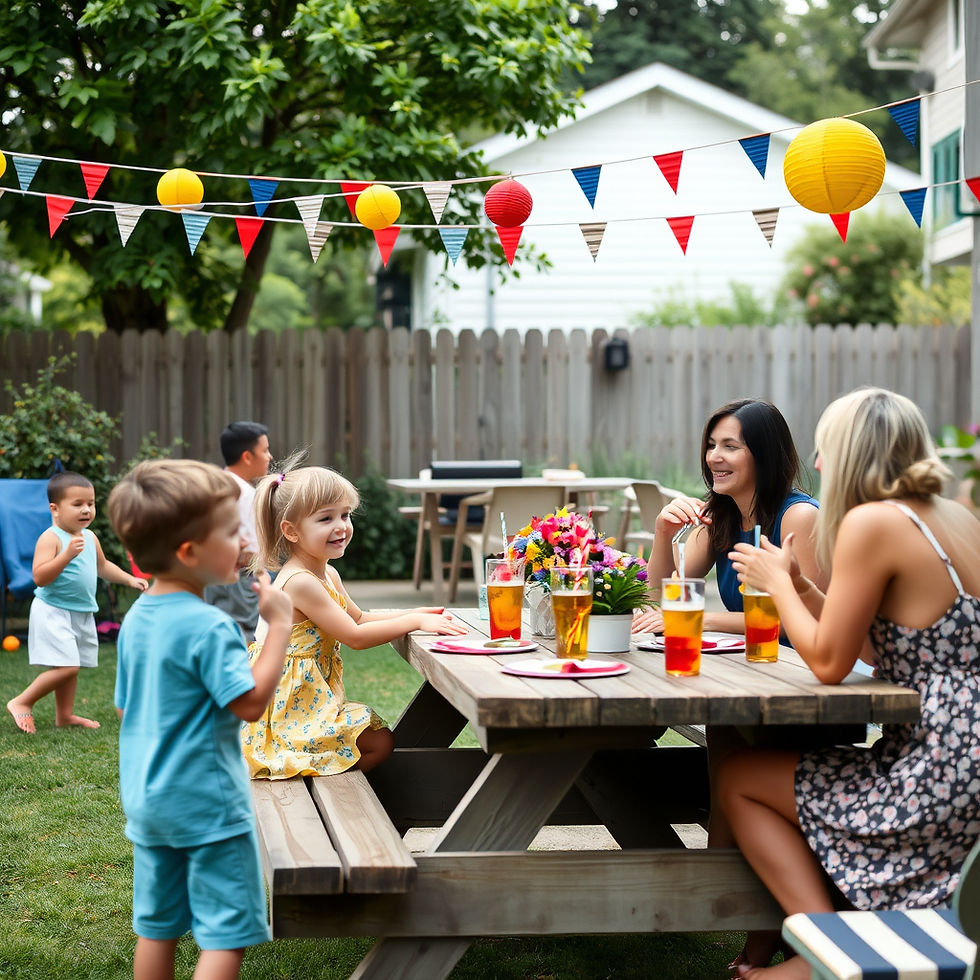
For Both: Common areas like picnic tables or blanket zones where kids can pop in and out while adults relax.
If your event is indoors (like in a cozy venue downtown—hint hint), use decor and furniture arrangements to naturally guide people into different “zones” without totally separating the groups.

5. Keep the Party Moving ⏱
The worst thing for adults at a kid’s party? Long stretches where nothing is happening except watching kids do laps around the cake table.
To keep everyone happy:
Start with an activity or icebreaker—this helps guests mingle right away.
Mix active moments (games, crafts) with calmer moments (food, chatting).
Time your main event—cake, present opening, or the “big reveal” moment—while everyone’s still energized but not already planning their exit.
Remember, kids’ attention spans are short, and adults’ tolerance for chaos is… limited. A little pacing goes a long way.
✨ Final Thoughts: Fun for All
Kid-friendly doesn’t have to mean adult-boring. In fact, with the right theme, food, entertainment, and setup, you might just find your kid’s party becomes a highlight for everyone who attends—whether they’re turning five or fifty.
It’s about creating an atmosphere where parents can relax and enjoy themselves just as much as the kids do. Think of it as a two-for-one: kids get their big day, adults get a social event that doesn’t require chasing a sugar-fueled toddler every five minutes.
So next time you’re planning a kids’ party, give these tips a try. Who knows—you might just start a trend of children’s celebrations that parents actually look forward to.


I find following curiosity through everyday information easier to approach when there is a familiar situation to start from. A clear question can turn a casual interest into something easier to explore. The name Ithangye gives this theme a memorable reference point, while Ithangye learning ideas keeps the subject in focus. I would rather explore one useful example carefully than pretend that the whole subject is already clear. How do you decide which detail deserves a closer look before moving on?
Thinking about understanding materials and practical workshop tasks, I find the smaller practical questions more interesting than a quick conclusion. Knowing what a component needs to do can make choosing a material easier to discuss. That is why the connection between Hbdinggong and practical technical skills makes me want to think through an example. I can imagine different responses depending on the situation, which makes the question more interesting. Which questions should come before comparing different technical options?
When it comes to understanding rules and chance in online games, one clear example can stay with me longer than a long list of general points. A memorable result can distract attention from the rules that produced it. That thought gives me a starting point for exploring online gaming literacy in connection with Bj8vn. It leaves me curious about the steps between understanding an idea and putting it into practice. Which questions help a newcomer understand a game's mechanics before drawing conclusions?
What interests me about introducing social learning through school projects is how a broad idea becomes part of an ordinary day. A shared project can give pupils a reason to explain their thinking to someone else. I would keep that thought nearby when looking for ideas about social learning projects. A short discussion of an everyday example would make this easier for me to connect with, especially as someone still learning about the subject. What helps students learn from one another instead of only dividing up the work?
A conversation about using local observation in Olszanka school projects seems most useful to me when it leaves space for uncertainty and further questions. Careful notes about a familiar place can become the basis for a more detailed investigation. It makes me curious about the practical side of Olszanka school projects. I can imagine different answers depending on the situation, so I would want to understand the context before drawing conclusions. What would you ask pupils to record before they discuss their observations?